THE MOST EXPENSIVE COFFEE IN THE WORLD:
What is the most expensive coffee in the world, and can you actually buy it?
The world auction record is $30,204 a kilo. The coffee was later offered in Dubai at $980 a cup. Here's what that coffee is, why it costs that, and how the next picking from the same plot ends up in a pod for £6.
The most expensive coffee ever sold at auction is a washed Geisha from Hacienda La Esmeralda in Boquete, Panama. In August 2025 a twenty-kilo lot of it, scored 98 out of 100 at the Best of Panama competition — six of the twenty-two judges gave it a perfect 100 — sold for $30,204 a kilogram — $604,080 for the lot, after 549 bids. The buyer was Julith, a roastery in Dubai that had opened the week before. That autumn Julith put it on the menu at 3,600 dirhams a cup, about $980, and said it would serve four hundred of them.
Every list of "the world's most expensive coffees" will give you that number, then a photo of a civet, and then stop. What they won't tell you is what the coffee is, why anyone pays that for it, or the part that's more useful: that the next picking from the same plot, two weeks later, is in a capsule for £6 a cup.
At a glance. "Most expensive coffee" means three different things.
Auction record. The world auction record is $30,204 per kilogram, set at the 2025 Best of Panama by Hacienda La Esmeralda's washed Geisha lot GW-01, scored 98. The record stood through the 2026 Best of Panama auction, which closed on 24 September 2026: the top lot, Elida Estate's Geisha Torre, sold for $18,004 a kilogram ($270,060 for the fifteen-kilo lot) to Grand Cru, and the fifty-lot auction cleared $3,041,940 in total. The previous world record was $13,518 a kilogram, set in September 2024 at Lamastus Family Estates' private auction for an Elida Geisha Honey lot; the previous Best of Panama record was $10,013, also Elida, a month earlier.
At the 2026 competition itself, Hacienda La Esmeralda took the Panama Cup as Panama's best overall producer for the second year running, placing second in Natural Geisha, second in Varietals and third in Washed Geisha. Its natural Geisha lot drew the third-highest price of the auction, $10,024 a kilogram, bought by SAZA Coffee.
Cup price. The record lot was later offered by Julith in Dubai at around $980 a cup. The official Guinness World Record for a cup of coffee is $680, set six weeks earlier by Roasters in Dubai, also with Esmeralda Geisha.
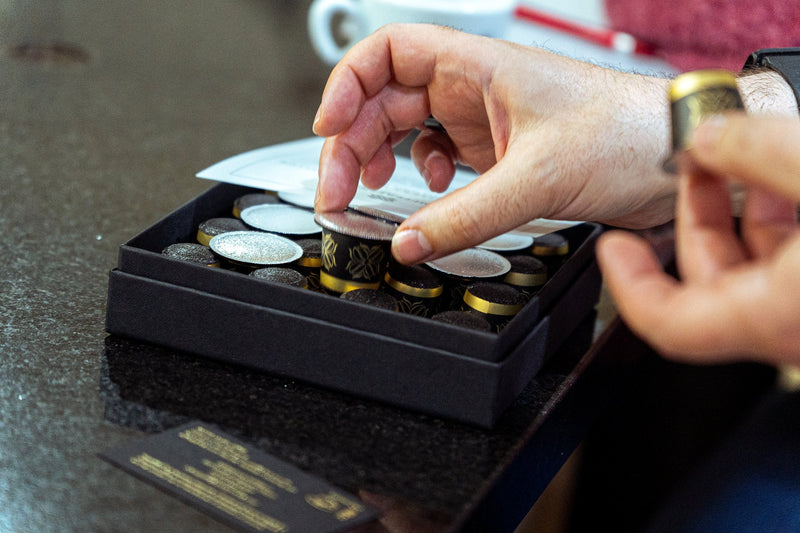
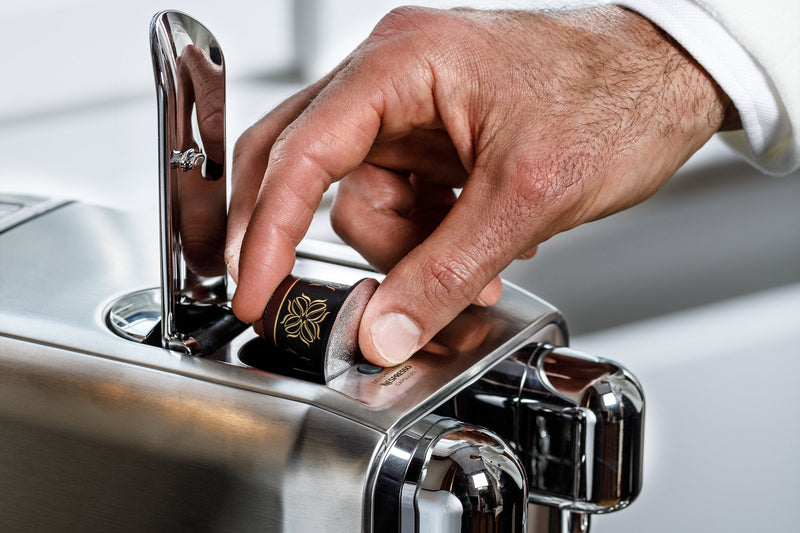
Can you buy something comparable? Difference Coffee sells Hacienda La Esmeralda's Nido 8 washed Geisha — the picking that followed Nido 7 by two weeks — in Nespresso Original-compatible pods at £60 for ten, £6 a cup, in an edition of 390 boxes. It also sells Elida Estate's natural Geisha at £50 for ten.
Why it costs that
The price is not a mistake and it is not a stunt, though the cup in Dubai is a bit of both. It comes from three things arriving at once.
The variety. Geisha, sometimes spelled Gesha, is a coffee variety that tastes like nothing else: jasmine, bergamot, stone fruit, tea-like clarity. It is low-yielding, and its most celebrated expressions come from high-altitude farms, particularly in Panama. Esmeralda's owners, the Peterson family, entered it in the Best of Panama in 2004 and the judges had never tasted anything like it. It sold that year for $21 a pound. By 2007 the same estate's Geisha made $130 a pound. Geisha has dominated Best of Panama price records ever since.
The competition. The Best of Panama is a national competition judged by an international panel. Lots are cupped blind and scored; the top fifty go to a public online auction. A score of 98 had never been given in the competition's history. When a score like that meets an auction with buyers from Dubai, Beijing, Tokyo and Shanghai competing for one unique twenty-kilo lot, scarcity and competition begin to matter as much as what's in the cup.
The size. Twenty kilograms. Roasted, that's about seventeen kilos of coffee, or somewhere around 850 double espressos if you're careful. When a lot is that small, every kilo is a headline.
For a sense of scale: on the day of the auction the commodity price for arabica was about $6.57 a kilo. The record lot sold for four and a half thousand times that. The average across all fifty auction lots — a better measure of what the very best Panamanian coffee is worth to people who buy it professionally — was $2,861 a kilo, and thirty of the fifty lots cleared $1,000.
The other "most expensive coffees"
You'll see two other names on every list, and they're worth separating from this.
Kopi Luwak is coffee cherry that has been eaten and passed by a wild civet, which selects ripe fruit and ferments it as it digests. Black Ivory does the same with elephants. Both are expensive because the yield is tiny and the collection is slow, and both held "most expensive" headlines for years. Made from genuinely wild-collected, high-quality coffee, Kopi Luwak can be unusually smooth and low in bitterness, and we sell one from Gayo, Sumatra, that we're proud of. At the other end of the market, the story can matter more than the quality of the coffee.
Geisha's price comes from somewhere else. The best lots repeatedly score at the very top of blind competitions. Add tiny quantities and buyers competing for a unique lot, and the price follows.
The part nobody tells you: where to buy it
Here is what every article on this subject leaves out. Best of Panama lots are mostly bought by specialty roasters — in Japan, China, the Gulf, occasionally Europe — who roast them and sell them in small quantities at prices that reflect what they paid. So the top lots do reach the public, in grams rather than kilos, for a few weeks a year. Julith is the exception: it has said its twenty kilos aren't for sale beyond a small allocation to Dubai's ruling family.
But the question people are actually asking is: can I drink Esmeralda Geisha from that plot, that season, without a plane ticket and a $980 bill? And the answer is yes.
Hacienda La Esmeralda picks and processes each plot in numbered lots through the harvest. The record coffee was Nido 7. Difference Coffee's washed Geisha is Nido 8 — the next picking from the same plot, two weeks later, also washed, though dried differently. For a customer, it is about as close to the record lot as you can get without having bid on it.
It costs £60 a box of ten. £6 a cup.
We didn't set that price to make a point about Dubai. It's what the coffee costs to buy, roast and present properly, with a margin. But it does make the point.
How we got it
Esmeralda doesn't sell to the public. Ahead of each year's auction, the estate offers a small number of its lots directly to a handful of roasters it has worked with over years. Difference Coffee is one of them, and has been buying from the Peterson family for a decade.
That access comes from a relationship built over a decade. Part of that relationship has been introducing Esmeralda's coffee to some of the chefs and restaurants that value it most. In October 2025 Rachel Peterson of Hacienda La Esmeralda joined us at the Les Grandes Tables du Monde congress in Athens, presenting her family's coffee to more than two hundred of the world's leading restaurateurs. In London, Rachel and her daughter Alex sat down to lunch with a table of our chef-clients at Gary Foulkes's Cornus in Belgravia. The estate's Geisha, through us, is served at a small number of restaurants — among them Cornus, Muse by Tom Aikens, Brooklands by Claude Bosi at The Peninsula, and Jean Delport's Restaurant Interlude at Leonardslee in Sussex.

Getting Nido 8 is what that relationship looks like in practice.


What it tastes like

Coffee Review, the American publication that has blind-tasted and scored coffee since 1997, has evaluated Difference Coffee's Esmeralda Geisha capsule five times — in August 2018, June 2020, November 2020, August 2021 and July 2022 — each time as a 25ml ristretto from a Nespresso machine. Every one of them scored 94. The most recent found lilac, plum, almond, cocoa nib and lemon verbena, a silky mouthfeel and a crisp finish.
Ninety-four matters for two reasons. As of October 2026 it is the highest score Coffee Review has awarded to a coffee in a capsule — across its single-serve category of nearly two hundred reviews going back to 2013, nothing else has scored above 93. And it's the threshold for Coffee Review's top-rated list, which is otherwise made up of whole-bean coffees from the best roasters in the world.
Compare that to how Julith's head roaster described the $980 cup to AFP: white florals like jasmine, orange and bergamot, apricot and peach, honey. Different lot, different year, different brew — but the Esmeralda Geisha signature is recognisable. That's what a great estate and a stable variety give you.
Nido 8 in the cup: jasmine on the nose, bergamot and stone fruit through the middle, strawberry lingering on the finish. Monde Selection has awarded Difference Coffee's Esmeralda Geisha Grand Gold in both 2025 and 2026, and in 2025 a Diamond Trophy, which it gives only to products that have held Gold or better for three consecutive years. The current edition also holds a Double Gold from the Aurora International Taste Challenge 2026.

How to get the most out of it
Two things, both simple. Run a blank shot of water through the machine first so the coffee doesn't meet a cold thermal block. Then pull it short: 25ml, not the factory 40. Geisha's aromatics are delicate and over-extraction flattens them faster than it does a chocolatey Brazilian. If you want a longer drink, add hot water after, not through the capsule. Coffee Review used the same 25ml extraction for each of its 94-point reviews.
Questions we get asked
Is Difference Coffee's Geisha the same as the $980 cup?
Not the same lot. That was Nido 7, a twenty-kilo lot bought at auction. Ours is Nido 8 — the following picking from the same plot, two weeks later, same variety, both washed, though dried differently — offered to us by the estate ahead of the auction.
Why is yours £6 when theirs is $980?
Because we didn't buy ours in the auction. The $980 cup begins with green coffee bought for $30,204 a kilogram in competition between bidders for one unique twenty-kilo lot. Nido 8 was allocated directly by the estate through our longstanding relationship with Esmeralda. Auction lots and estate allocations are priced differently. Both are real prices; they measure different things.
What was the previous record?
$13,518 a kilogram, set in September 2024 at the Lamastus family's own auction for a three-kilo lot of Elida Geisha Honey from the Aguacatillo plot, bought by Cupping Post of South Korea. A month earlier the same family had set the Best of Panama record at $10,013 a kilogram with Elida's natural Geisha. We sell Elida's natural Geisha in pods as well — a thirty-kilo micro-lot, £50 for ten.
Is Kopi Luwak the most expensive coffee?
It was for a long time, and a lot of websites still say so. Geisha auction prices passed it years ago. Kopi Luwak done properly is a fine coffee with a distinctive smoothness; it just isn't the record holder any more.
Can I buy Best of Panama auction lots?
Sometimes. Most winning bidders are specialty roasters who sell the coffee on in small quantities — a few hundred grams at a time — at prices that reflect the auction. It's worth following the roasters named in the results if you want to try one. The record lot is the exception; Julith isn't selling it.
Will these work in a Vertuo machine?
No. Nespresso Original only.
Panama Geisha Washed, Nido lot — £60 for 10 pods
Panama Geisha Natural, Elida Estate — £50 for 10 pods
More from Our World