HAWAII KONA:
Real Kona coffee in the UK: what "100% Kona" actually means, and where to find it
Few coffee names are imitated as widely as Kona. Here's how to read a label, why the rules are changing in 2027, and which estate's Kona we put in a pod.
Kona coffee comes from one place: a strip of farmland on the western slopes of Mauna Loa and Hualālai on the Big Island of Hawaii, about thirty miles long, worked by hundreds of small farms, most of them a few acres and family-run. For most of the last thirty years, the bag labelled "Kona" in a shop has been allowed to contain ten per cent of it.
That is not an exaggeration. Under Hawaii law, a coffee sold as "Kona Blend" has needed only ten per cent Kona by weight. The other ninety could come from anywhere. In 2024 the legislature voted to raise the minimum to fifty-one per cent — the first change in over thirty years — with effect from 1 July 2027. In the meantime, Kona farmers have collected more than $41 million in settlements from retailers who sold "Kona" containing little or none.
So the first thing to know about buying Kona is that the word on the front is not the fact you need. The fact you need is on the back.
At a glance. Three things to look for.
"100% Kona Coffee." That phrase means all of the coffee is from the Kona district. "Kona Blend" does not: under current Hawaii law a Kona Blend may contain as little as ten per cent Kona, rising to fifty-one per cent from July 2027. Be wary of looser phrases — "Kona style," "Kona roast" — that tell you nothing about where the coffee came from.
A grade and a certificate. The Hawaii Department of Agriculture grades Kona green coffee by bean size and defect count — Extra Fancy, Fancy, Number 1, Prime — and certifies its origin. Ask the seller for the grade and the origin documentation. A serious Kona supplier can provide both.
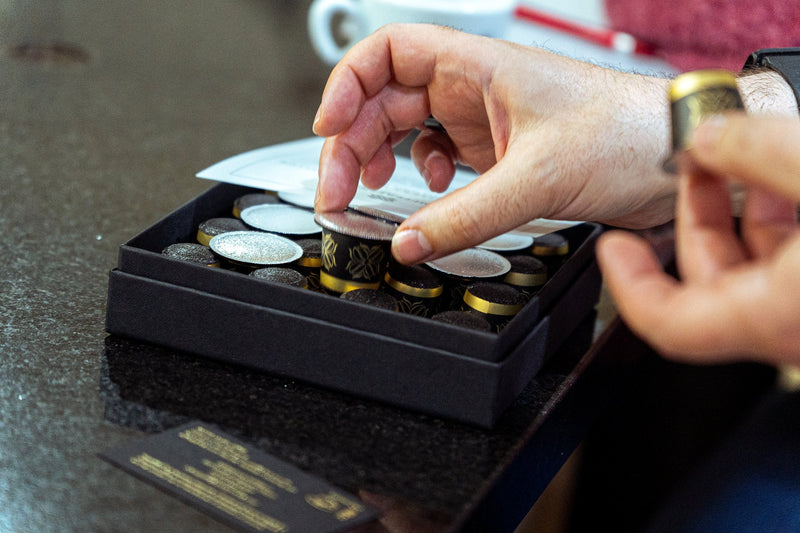
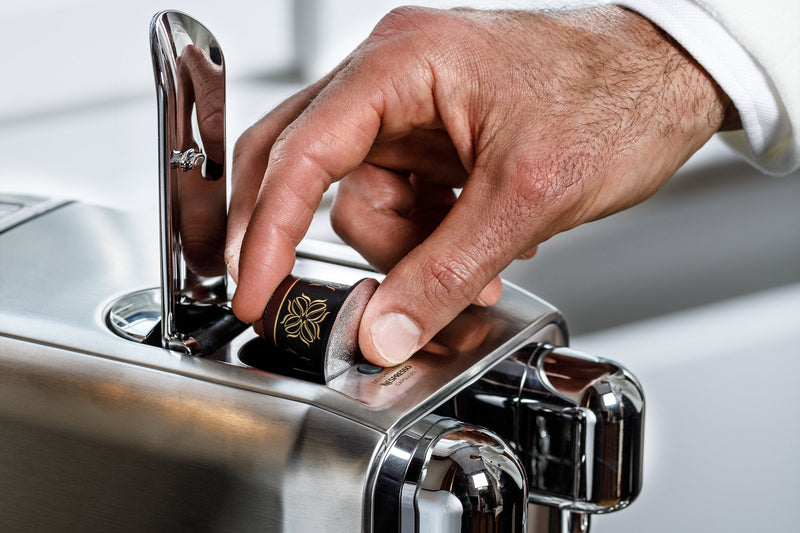
An estate, not a region. Kona has hundreds of farms and they are not the same. The best answer to "which Kona?" is a name. Ours is Hawaiian Queen Coffee. Difference Coffee's Hawaii Kona is 100% Kona Typica from Hawaiian Queen, grown at 1,800 to 2,000 feet above Holualoa in the Kona Coffee Belt, certified for origin and graded Extra Fancy — the top grade — by the Hawaii Department of Agriculture, in Nespresso Original-compatible pods at £35 for ten. £3.50 a cup.
Why it costs that

Kona is expensive for reasons that have nothing to do with marketing.
It's grown in America. Hawaiian farm labour is paid at American rates. Every cherry is hand-picked, several passes per season, at labour costs far above those in most coffee-producing countries. That alone gives Kona a cost base few coffee origins face.
The farms are tiny. With hundreds of farms averaging only a few acres, mechanisation and economies of scale are limited, and a poor harvest is harder to absorb.
There isn't much of it. The whole of Hawaii — five islands, every district — produced 3.4 million pounds of green coffee in the 2023–24 season, about a tenth of one per cent of the world's coffee, and Kona is only part of that. Production is small relative to demand from Japan, the US mainland and specialty buyers worldwide.
And a lot of what's sold as Kona isn't. Which is why the real thing costs what it does, and why the 10% law mattered: it let the name do the work the coffee should have done.
What it tastes like

Kona isn't a coffee that shouts. Despite its relatively low elevation — most farms sit between 800 and 2,500 feet — Kona sits unusually far north for a major coffee-growing region, and the coffee develops slowly, sweetly, and cleanly. The classic profile is mild, rounded, low in bitterness, with a gentle brightness rather than sharp acidity. It is the coffee that people who think they don't like acidity in coffee tend to love.
Ours is a bright cup with candied-apple sweetness and a zesty edge: dark chocolate, cereal, apple and mango. Strength 7 — a breakfast coffee in the best sense. Monde Selection has awarded it Grand Gold three years running, in 2024, 2025 and 2026; it holds Gold from the Aurora International Taste Challenge 2026 and a Great Taste star from 2024.
The estate
Hawaiian Queen Coffee was established in 2009: a 160-acre farm at Wai'ono Meadows, just above the village of Holualoa, at 1,800 to 2,000 feet in the heart of the Kona Coffee Belt. The Kona Coffee Cultural Festival, held every November since 1970, runs the district's cupping competition — the closest thing Kona has to a Cup of Excellence — and Hawaiian Queen has taken first place in its Crown Division four times, in 2013, 2014, 2019 and 2021, with a top-three finish in six other years. Harvest runs from August to February. Everything is hand-picked in several passes; only red cherry goes to the mill. At Hawaiian Queen the parchment dries under cover — Kona's afternoon rain makes an open patio a gamble.

We have bought from Hawaiian Queen since 2019, and we buy one grade only: Extra Fancy.
How to get the most out of it

Kona is forgiving in a way Geisha isn't. Two things still help. Run a blank shot first so the machine is hot and clean. And keep it short — 25ml, the ristretto setting, not a lungo. Kona's sweetness lives in a short cup; stretch it and you get the cereal without the apple.
It also takes milk well — better than most single-origins at this level. The chocolate and cereal notes come forward and the apple sits behind them.
Who drinks it
Our Kona is the house coffee at Ocean, Hans Neuner's two-Michelin-star restaurant at Vila Vita Parc in the Algarve. "For me Kona coffee is the perfect last course of my menu," Neuner says. "Its unbelievably balanced flavours will stay in the minds of our guests for days." It is also the house pour at Woven by Adam Smith, the Michelin-starred restaurant at Coworth Park in Berkshire — "a truly beautiful coffee that's rich and perfectly balanced," Adam Smith says, "an epic way to finish any meal" — and is served at the Gstaad Palace in Switzerland and at Harry's Bar on South Audley Street in Mayfair, among others.
It's an unusually easy coffee to put in front of a hundred different guests. Nobody finds it too bright, too heavy or too strange.
Questions we get asked
Is Kona coffee worth the money?
Genuine 100% Kona from a named estate, yes, if you like a mild, sweet, clean cup. A "Kona Blend" at a fraction of the price is not a bargain; it is mostly a different coffee.
What does "100% Kona" mean?
That every bean in the bag was grown in the Kona district of Hawaii. It is a protected phrase under Hawaii law. "Kona Blend" currently means at least ten per cent Kona; from 1 July 2027, at least fifty-one per cent.
Why is Kona so expensive?
American labour, hand-picking, very small farms, limited supply, and strong demand from Japan and the US mainland. It's expensive because of what it costs to grow, not because of what it's called.
What's the difference between Kona and Jamaica Blue Mountain?
Both are mild, low-bitterness island coffees with famous names and protected origins, and both have been widely imitated. Blue Mountain tends to be softer and more chocolate-and-nut; Kona has a little more brightness and fruit. We sell both, from named estates, in pods — Blue Mountain here.
Which grade is best?
Extra Fancy is the largest bean size with the fewest defects; Fancy, Number 1 and Prime follow. Grade reflects bean size and defect standards rather than guaranteeing flavour, but knowing it gives you one more verifiable fact about what you're buying. We buy Extra Fancy only.
Can you buy real Kona in the UK?
Yes, though not widely. We checked eighteen Kona listings from UK sellers in September 2026: nine named neither the estate nor the grade, only five named both, and only two sellers — ourselves and one other — offered Extra Fancy. Ours is 100% Kona Typica from Hawaiian Queen Coffee, HDOA-graded Extra Fancy, in pods.
Will these work in a Vertuo machine?
No. Nespresso Original only.
More from Our World